
The following workflow has allowed me to seamlessly switch between all of the agent platforms I use, like Codex, Claude Code, Muse, GrokBot, and many more.
Every week there's a new model or a new agent, and I want to try all of them. The problem is that every time I switched, I had to set everything up again. Connect my Gmail again. Connect Notion again. Re-explain how I write scripts. Re-explain how my apps work. The new agent was smart, but it didn't know anything about me or my stuff.
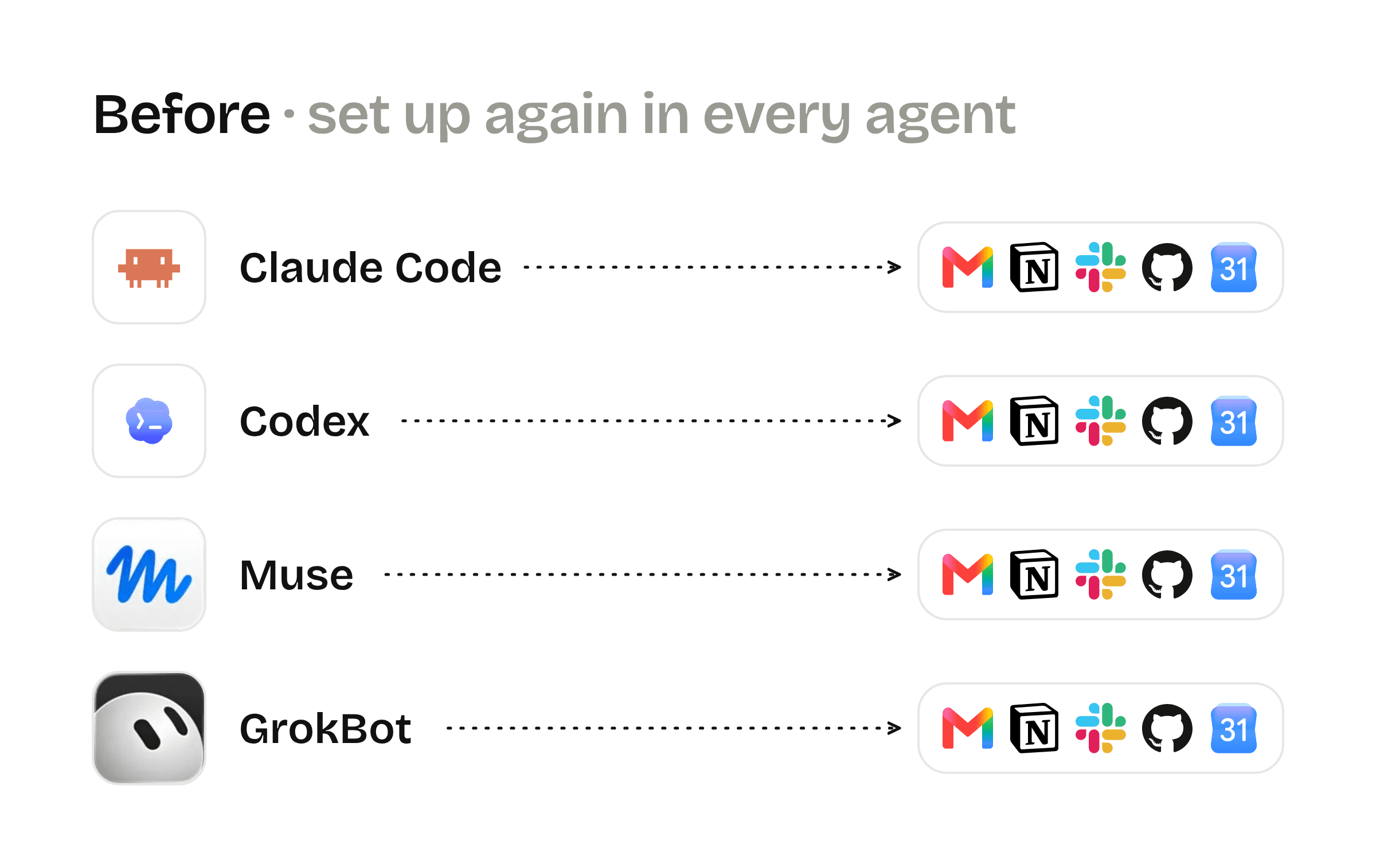
So I stopped setting things up inside each agent. Now everything lives in one place, Composio, and every agent just plugs into it.
What Composio is
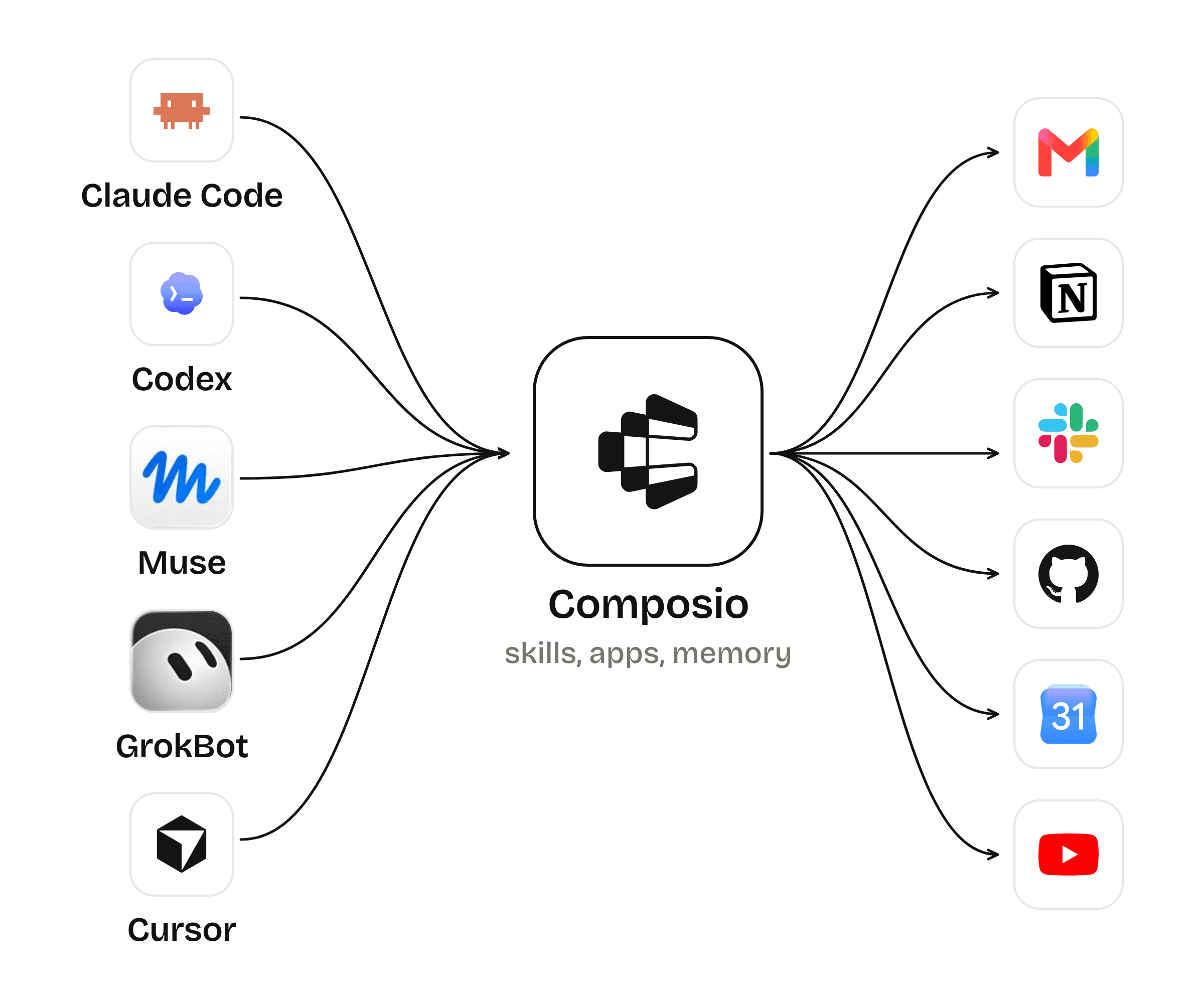
Composio connects AI agents to your apps. It sits between your agent and over a thousand tools like Gmail, Slack, Notion and GitHub, and it handles the annoying part: logins and API keys. You sign in to each app once, inside Composio, and that's it.
It works with anything that speaks MCP, which is basically every agent now. Claude Code, Codex, Muse, GrokBot, Cursor. You add Composio once to each agent, and from then on they all share the same connections.
But the part I actually care about isn't the app connections. It's the skills.
Skills live in Composio, not in the agent
A skill is just a set of instructions that teaches an agent how to do one specific thing the way I want it done. Most agents let you save skills, but they save them inside that one agent. Claude Code skills stay in Claude Code. Codex skills stay in Codex.
Composio lets you save skills in Composio itself. So I write a skill once, and any agent connected to Composio can search for it, read it and use it. When I improve a skill from Codex, Claude Code gets the better version too. I don't copy anything between platforms anymore.
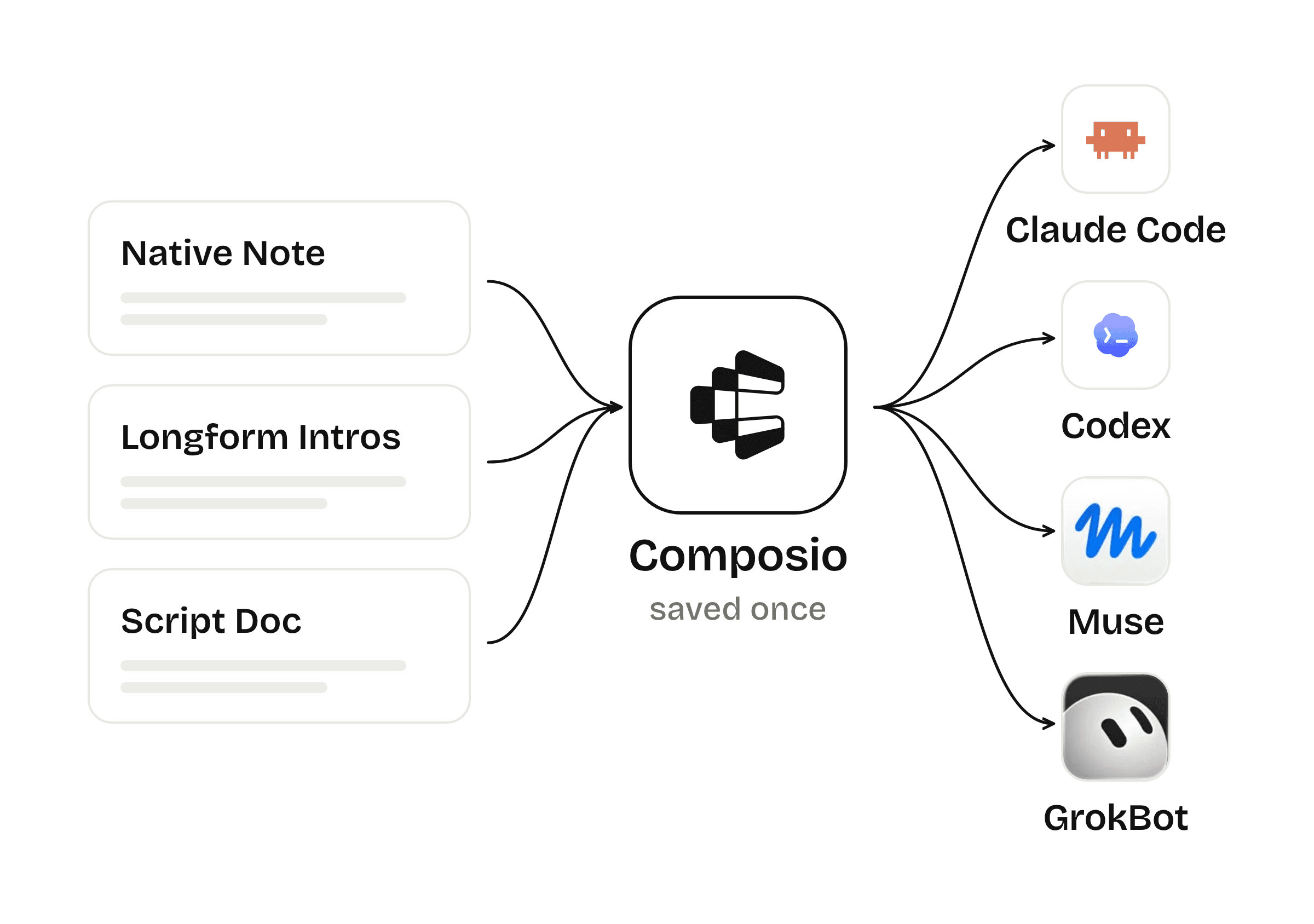
Here are some of the skills I actually have in there right now:
- Native Note. Reads and edits my scripts in Native Note, the app I use to plan my videos. Any agent can rewrite a line, leave a comment, change a script's status, or save an idea to my idea board.
- Native Note Excalidraw. Reads and draws on my whiteboards, and matches the style of each board.
- Native Note Edit Feed. My review queue for short-form edits. An agent can upload a new version of a video, read my comments, and make the next cut.
- Narrative Short Format. Writes a short-form script about something that just happened, in my voice, with a source to show on screen under every line, and drops it into Native Note.
- Longform Intros. Writes and rewrites my YouTube intros using my best-performing intros as the reference.
- Creator Examples. Pulls up my library of great intros and short-form scripts from creators I study, like Kallaway, Hormozi and Cleo Abram.
- Script Doc. Paste any YouTube link and get a clean, readable script of the whole video, split into sections.
- Scrape Creators Research. Pulls profiles, posts, transcripts and comments from social media. I wrote a whole guide on Scrape Creators.
- Gemini Agentic Video. Has Gemini actually watch a video and tell me timestamps, the best clips, or where the pacing drags.
- Blender Video and RunPod Render. Make my 3D room videos and render them on cloud GPUs.
- Grill Me. Before a big task, the agent asks me focused questions one at a time until it really understands what I want.
None of these care which agent is running them. That's the whole point.
My own apps plug in too
Composio isn't only for big apps like Gmail. You can add your own tools to it.
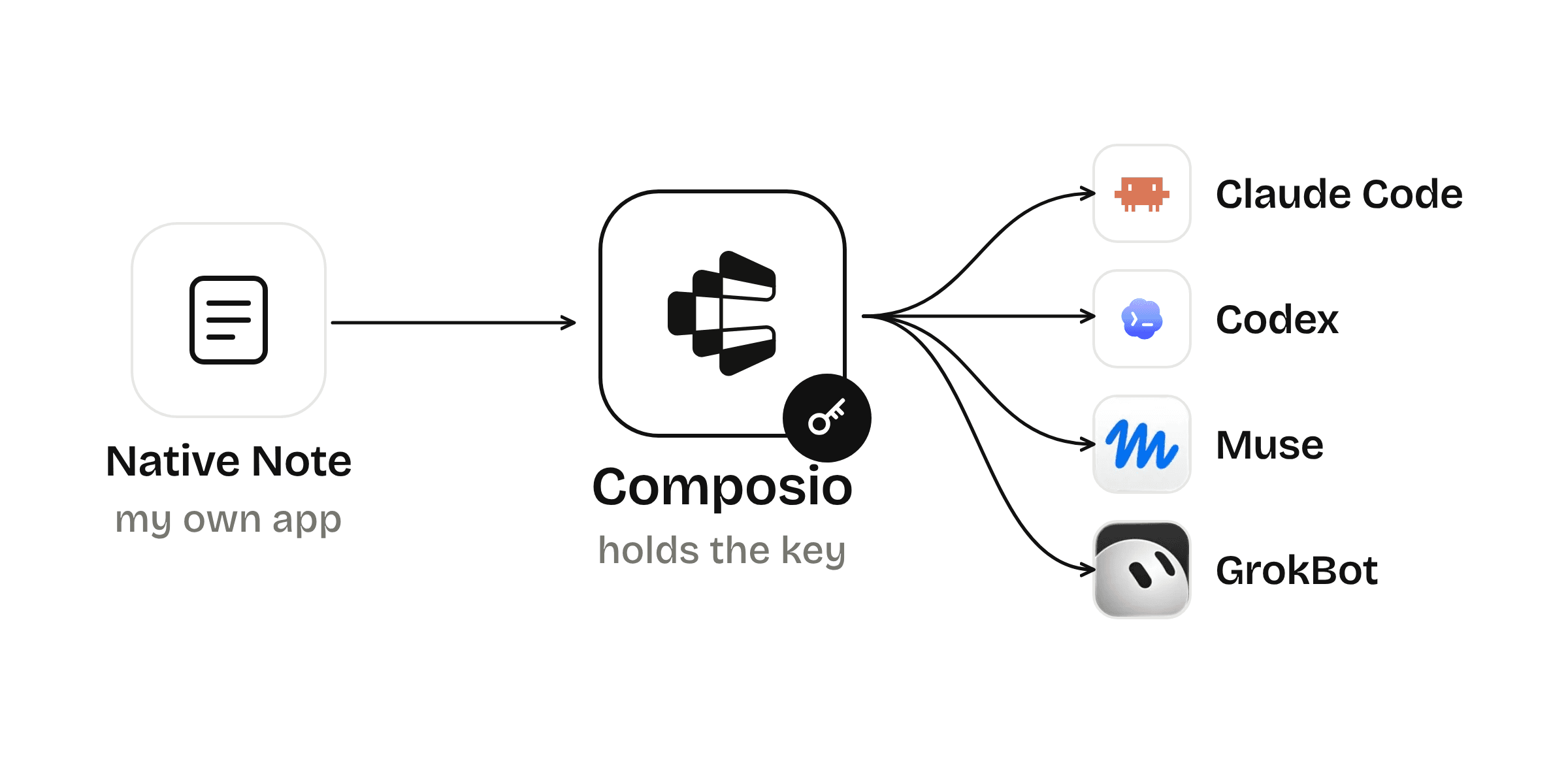
Native Note is an app I built for myself. I added it to Composio as a custom toolkit, so Composio holds the key and every agent can use it without me ever pasting a key into a chat. I did the same for a few other tools I use. Now a brand new agent I've never touched can open my scripts on day one.
Here's roughly what's connected right now: Gmail, Google Calendar, Google Docs, Google Drive, Notion, Slack, GitHub, Vercel, YouTube, X, Typefully, Trello, ClickUp, ElevenLabs, Descript, RunPod, Hostinger, Scrape Creators, plus my own apps.
One memory for every agent
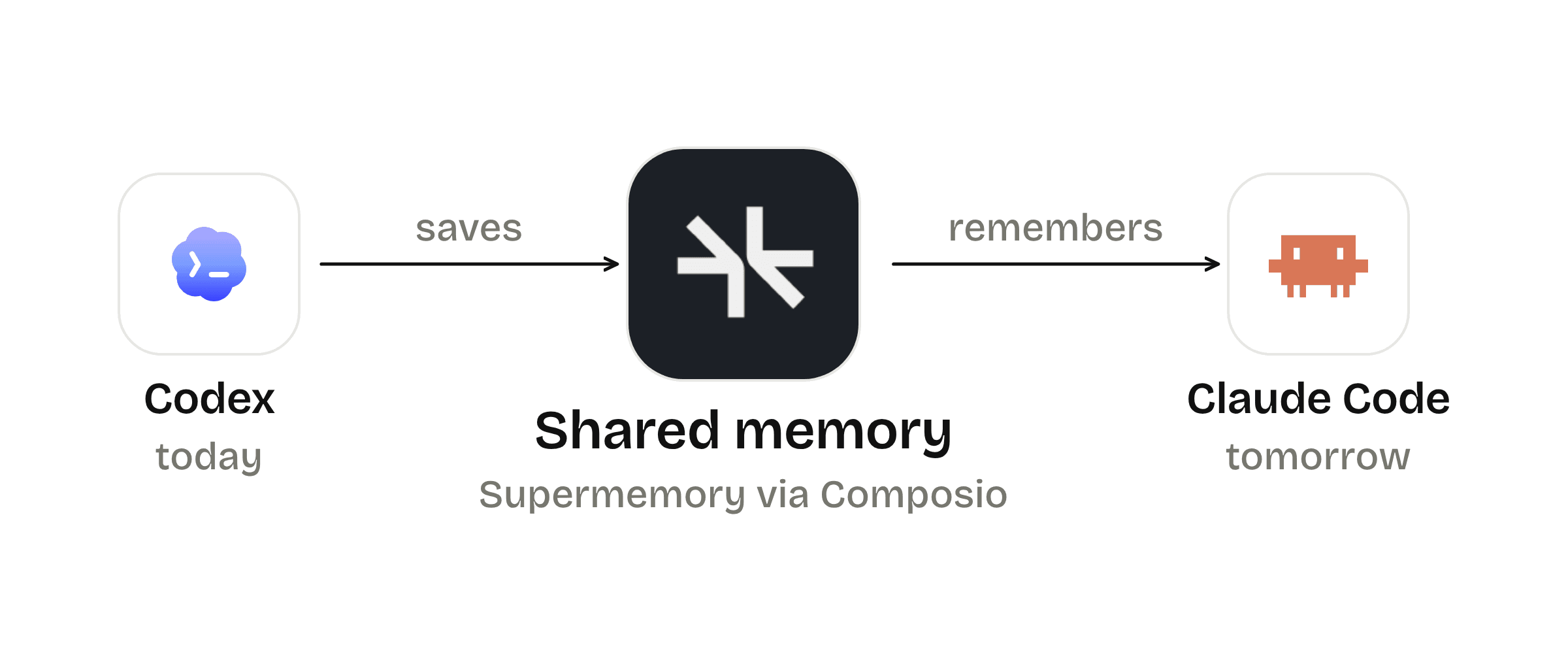
The last piece is memory. I have a skill called Riley Shared Memory that uses Supermemory through Composio. When an agent starts a real task, it checks my shared memory for my preferences, my projects and decisions I've already made. When it finishes, it saves anything worth remembering.
So if I tell Codex something today, Claude Code knows it tomorrow. My agents stop feeling like strangers I have to onboard every time.
How I'd set this up
- Make a Composio account at composio.dev.
- Add Composio to your agent. Composio gives you an MCP connection. Add it to Claude Code, Codex, or whatever agent you use. Honestly, the easiest way is to ask the agent to do it for you.
- Connect the apps you use every day. Start with two or three, like Gmail, Google Calendar and Notion. You sign in once.
- Make your first skill. Next time you catch yourself explaining the same thing to an agent twice, say "turn this into a Composio skill." Now every agent has it.
- Add the same Composio connection to your other agents. That's it. They all have your apps and your skills.
Why this matters
The models are going to keep changing. Muse Wonder came out last week. There will be a new best model next month. I don't want to be loyal to one agent. I want to use whatever is best that day.
When your skills, your apps and your memory live in one place, switching agents costs you nothing. You just open the new one and say what you want, and it already knows how to do it your way.